|
Giuseppe Ponga, Carnival in Piazza san Marco, Caffè Quadri |
Throughout Europe, the Enlightenment brought a thirst for reason, advances in the sciences, and a new concern for humanity. In Venice, it corresponded to a time of economic decline, political decay, and moral depravity. With the French Revolution and the epoch of Napoleon on the horizon, the Most Serene Republic of Venice was about to conclude its over one-thousand-year existence.
In The Age of Decadence, you'll immerse yourself in the revelry and the contradiction of this lighthearted era to discover the political, social, and economic conditions that animated the uninhibited passions of the eighteenth-century city and learn why Venice degenerated into the dissipate and licentious capital of all of Europe.
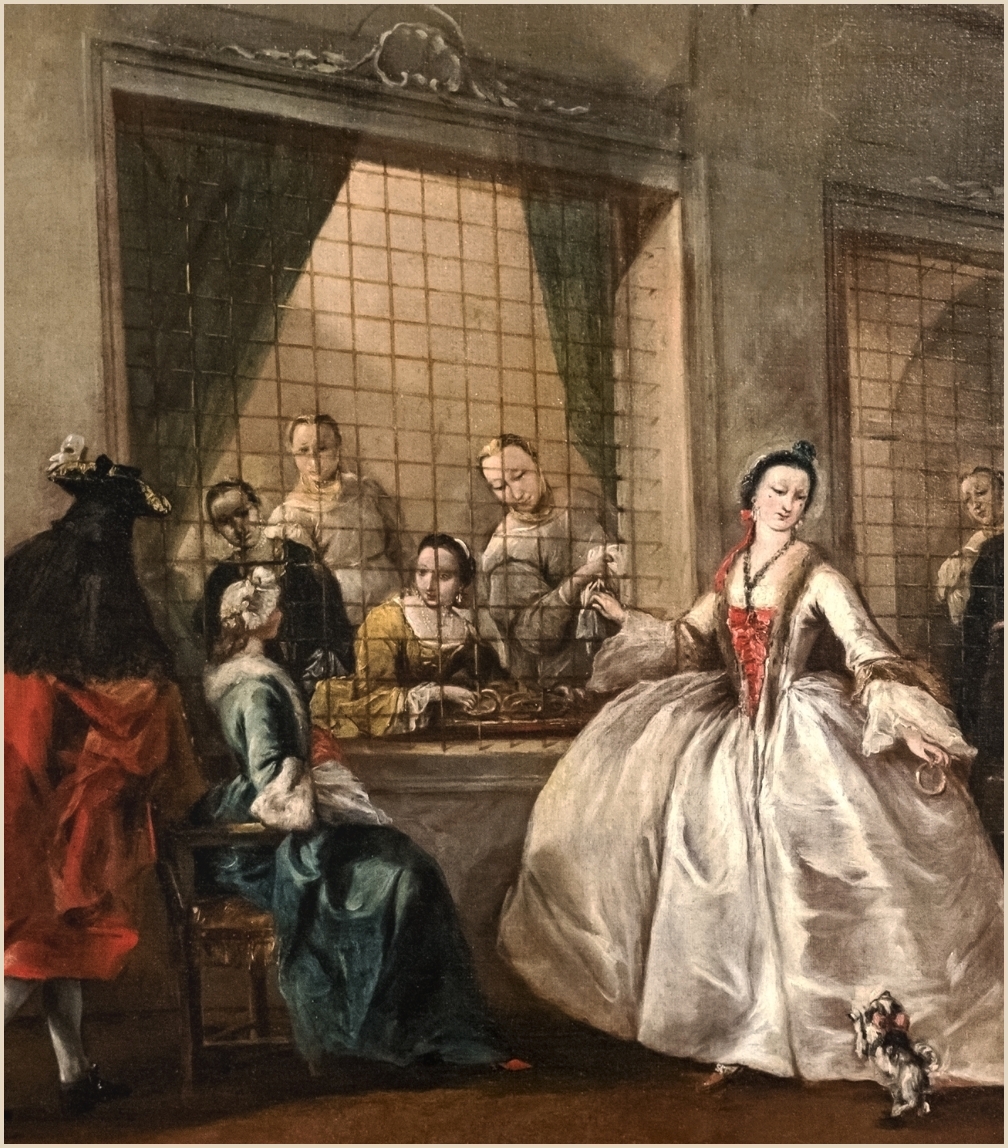
Francesco Guardi
Parlor of san Zaccaria
Ca' Rezzonico
We'll begin our history tour at the church of Santa Maria del Rosario and the dark years of the War of Crete when wealthy religious orders were suppressed and their properties confiscated in order to replenish the State's depleted coffers. As we visit the church, we'll talk about Venice's final acts of piety and observe the Old World as it struggles with the laicism and disbelief of the Enlightenment. Next, it's off to the lavish Ca' Rezzonico where we'll see the financial fall of Venice's ancient families and the rise to prominence and power of the nouveaux riches. We'll then turn our attention to the house's incomparable collection of eighteenth-century Venetian art. While Tiepolo immortalizes the self-proclaimed virtues of a dying aristocracy, Canaletto depicts sun-drenched façades of pageantry and bliss for foreign consumption. The scandalous poet Giorgio Baffo strikes out next at inept officials and lascivious priests in his lewd and erotic stanzas. We'll talk about the political significance of these censored sonnets and learn why they particularly appealed to the members of the Venetian judiciary. At the Fenice theater, we'll then see self-interested nobles spend the remnants of once-great fortunes on entertainment and talk about the social and political overtones in the plays of Goldoni and Gozzi. Next, it's on to a private casino where masked revelers whiled away the hours and then into Saint Mark's Square, the stage of Venice's roisterous Carnival. We'll talk about the distant origins of this most famous of celebrations and see the unrepressed enthusiasm embrace Venetians and foreigners alike. Cups still clatter in the nearby coffeehouses where we'll enjoy a sampling of the precious dark liquid and discover the reasons behind its irresistible appeal in eighteenth-century Venice. Here, we'll also relive the dramatic days of May 1797 when French troops arrived to the cry of “liberté, egalité, fraternité” and Europe's oldest republic took its final bow before quietly entering into the annals of history.
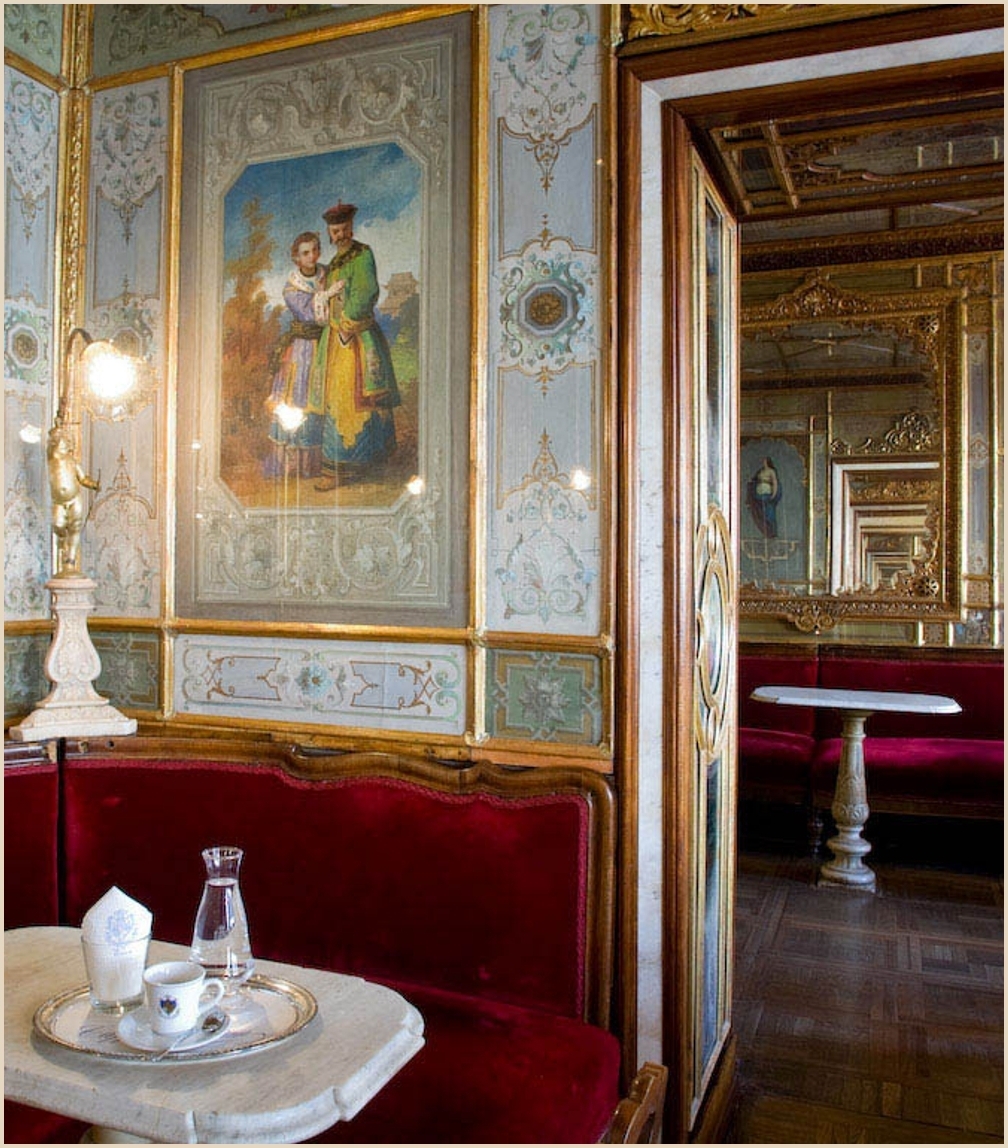
Caffè Florian
DURATION
Approximately 6 hours
- Depending upon availability, it is also possible to divide the guided tour over two half-days.
MAJOR SIGHTS
- Church of Santa Maria del Rosario
- works by Giambattista Tiepolo, Sebastiano Ricci, and Giambattista Piazzetta - Ca' Rezzonico
- works by Canaletto, Pietro Longhi, Francesco Guardi, Rosalba Carriera, and Giambattista Tiepolo - Venier gambling parlor (private visit)
- Caffè Florian or Caffè Quadri
- Piazza san Marco
ENGAGING TOPICS
- The Age of Enlightenment: science, faith, and a New World
- The nouveau riches: self-aggrandizement and the quest for omnipotence
- The Grand Tour: images and impressions of Venetian life
- Erotic poetry: reprobation and a new morality
- Comic theater: for and against the status quo
- The changing role of women: sexual liberation and social affirmation
- Enlightened writings: fashionable ideas and political censorship
- Carnival: pleasure and power in eighteenth-century Europe
AVAILABILITY
This guided walking tour is not available on Sunday and Tuesday.
REFERENCE MATERIAL
|
|
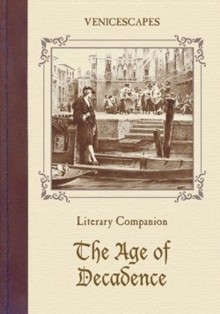
Literary Companion an exclusive anthology of eighteenth-century writings including journals and letters from the Grand Tour, sonnets of Giorgio Baffo, comedies of Carlo Goldoni, excerpts from “Useless Memoirs” by Carlo Gozzi, and articles from the “Gazzetta veneta” |
|
|
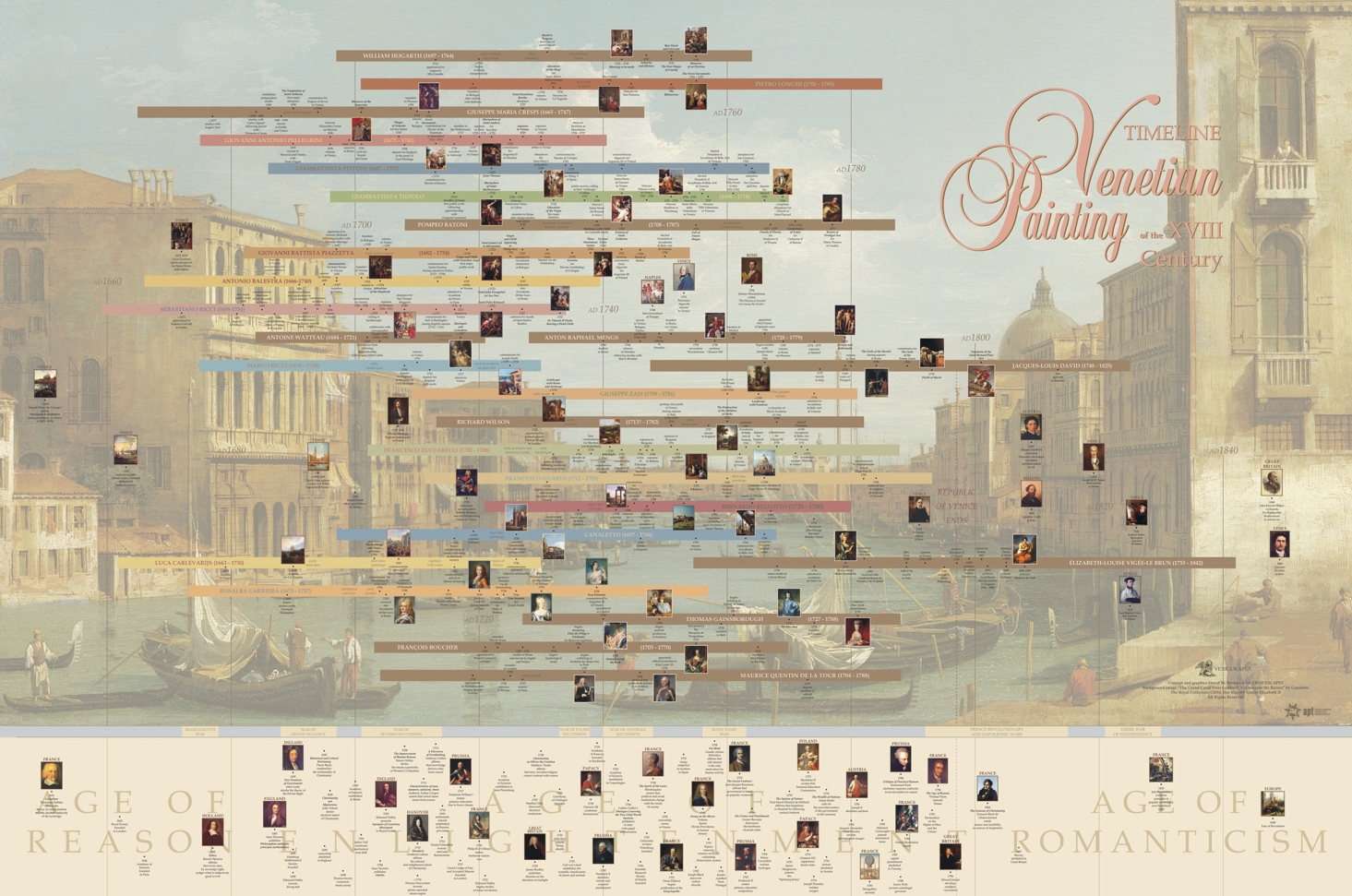
Venetian Painting
a comprehensive timeline with the lives
and principal works of the Venetian painters and their
European contemporaries along with the major scientific,
technological, and philosophical achievements of the |
COST
The price indicated for this private guided history tour is intended to cover the costs of the Society's continued research initiatives and organization and is in compliance with the conditions concerning the activities of non-profit organizations as set forth in the Ministry of Finance Unified Code Article 148, paragraph 3 (T.U. Art. 148, comma 3).
- Price: €340.00 (euro) for two (2) persons. Each additional adult costs €60.00. Incidental transportation costs and entrance fees are not included.
- Price includes one (1) hardbound copy of Venicescapes’ “Literary Companion - The Age of Decadence”. Additional copies are available at €20.00 per copy.
- Price includes one (1) copy of Venicescapes’ timeline “Venetian Painting in the Eighteenth Century”. Additional copies are available at €15.00 per copy.
- The ticket for the church of Santa Maria del Rosario can be purchased individually at the church or as a part of the Chorus Pass.
- The ticket for Ca' Rezzonico can be purchased individually at the museum or as a part of the Museum Pass.
SPECIAL NOTES
- The private visit to the Venier casino cannot be confirmed prior to arrival in Venice.
- A visit to one of the historic coffee houses in Saint Mark's Square is included in this guided tour to discuss the role of coffee in eighteenth-century Venetian society. During this visit, each participant will be expected to make a purchase.
- All participants in “The Age of Decadence” must be of at least 18 years of age. This itinerary is an analysis of social customs and moral attitudes of eighteenth-century Venice and includes forthright discussions on accepted sexual behavior and examples of erotic literature.
SUGGESTED READING
To help make this guided historical tour of eighteenth-century Venice a culturally enriching and educational experience, these books are recommended.
Reviews of
The Age of Decadence
A wonderful day of sheer, divine decadence! The tour is an in-depth look at an extraordinary way of life such as we've never seen before or again. I felt that I was truly living the era when the nouveau riches ascended to great palazzos on the Grand Canal, nuns took to cavorting with handsome, young men, women ran casinos for their own enjoyment, and coffee and chocolate, those most exotic of pleasures, were consumed with appetites approaching lust. The adventure was all the more poignant because I knew — no, I felt — that it was all coming to an inevitable and tragic end.
|
Amy Selwyn |
Well thought-out and presented. “The Age of Decadence” is a thought-provoking survey of the political, economic, social, and moral decline of a once great power. We enjoyed the contrast between a city that was vibrant and full of life and its infrastructure that was slowly decaying. Of the sights, Ca' Rezzonico stands out as a highlight of the tour; the ballroom and its artwork were lavish. We also truly enjoyed being taken into a private casino and understanding its original purpose. Overall, the degree of knowledge was impressive.
|
Steven and Majorie Sayer |
The choice of venues, poems, and excerpts from plays, interwoven with a well-researched and literate narrative, brought Venice to life. I highly recommend this virtual tour of eighteenth-century Venice to travelers interested in experiencing the city in an historical, socio-cultural context. I hadn’t realized until this tour just how superficial my previous experiences in Venice had been. Even the coffee and chocolate tasted better, enriched by the intellectual and sensory arousal.
|
Roni Funk |
The tour is an absorbing exploration of the descent or "decadence" of Venice leading to its voluntary submission to Napoleon in 1797. Within architectural wonders such as the 18th century Ca' Rezzonico and a mid-afternoon stop at a coffee and chocolate house in St. Mark's Square, the narrative covers Venetian politics, commerce, and society including the city as a “must-see” on the Grand Tour and the development of Carnival, private casinos, and public coffee houses. The tour is also a cautionary tale of how resistance to change in the world and a sense of superiority doomed a once-revered, world power.
|
Robert Latham |
The tour brings Venice to life - the depth of research is amazing! Most tours bring attention to the surface describing a church or a painting with some historical facts. This tour reconstructs the history of the time. We felt as if we were living the age of decadence and the characters would leave their residence at any moment and stroll in front of us to go to the theatre. We completely fell in love with this vision of Venice.
|
John and Robin Kingsmill |
It was remarkable how the guide connected Venice to the broader philosophical, scientific and cultural trends proliferating throughout Europe. We felt truly immersed in the city and began to understand the shifting dynamics that turned Venice from a major metropolis controlling the Adriatic into one that no longer held power and instead became a singular place of beauty, fixed in time.
|
Melissa and Carey Burtt |
The addition of the book at the end of the tour is a lovely touch. It offers insights into the social and political overtones of the writings of the era, allowing the reader to relive the delights of Venice from the comfort of home.
|
Mary Nolan |
For further information about this unique guided history tour of Venice
and reservations, write to
To share


|


|


|


|